
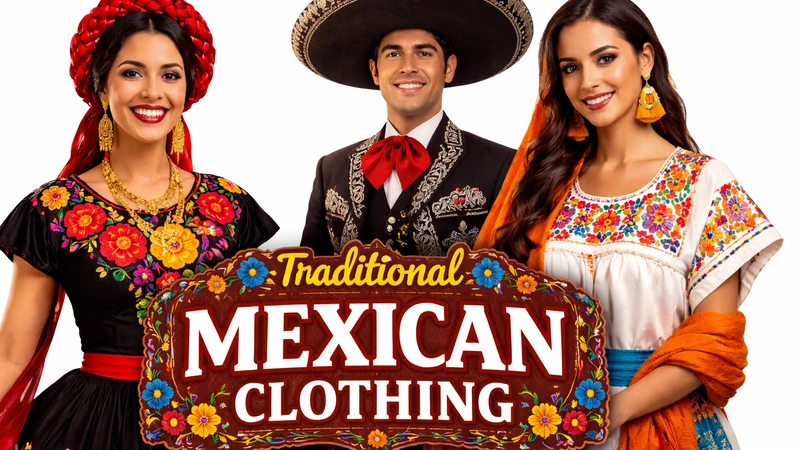
Mexican traditional clothing does not merely consist of sewn fabric; it actively represents Mexico’s living history, regional identity, and cultural heritage. Since the colorful craftwork of native clothes to the legendary charro suit that has become a global brand, the traditional Mexican clothing consists of centuries-long tales of family roots, craftsmanship, and social belonging.
The article is a discussion history, the designs, the symbolism, and the modern use of the traditional Mexican clothing, the paper serves as a complete guide to any reader who desires to learn something about the culture and have a true understanding of it.
The origins of the traditional Mexican clothes.
Traditional Mexican clothing traces its history back to the pre-Hispanic civilizations of the Aztecs, Maya, Zapotecs, and Mixtecs. Those cultures made clothes out of natural fibers like cotton, agave (maguey) and bark and painted them with natural dyes made of plants, insects (such as cochineal) and minerals.
When the Spanish settled in the 16 th century they combined with native styles. This amalgamation brought wool, silk, lace, tailoring, and new forms of silhouettes which form what we today know as the traditional Mexican clothes.
The Major Traditional Mexican Clothing.
Despite the differences existing across the regions, there are a minor number of factors that are common between the traditional Mexican garments:
Handwoven textiles
Highly ornamented
embroidery Bright,
symbolic colors
Natural materials
Figure of geometric and floral pattern
Conventional Mexican Women Clothing.
Huipil
One of the oldest and most important traditional women clothing in Mexico is the huipil. It is a loose fitting tunic that is normally hand embroidered.
Worn by native women in southern Mexico.
The designs represent the local beliefs, nature, and mythology.
Regions have different colors and patterns.
Rebozo
A rebozo is a long shawl that is woven to keep a person warm, to carry a baby or as a fashion accessory.
Made from cotton, wool, or silk
A national identity and feminism.
Frequently has detailed fringe work (rapacejo).
Tehuana Dress
The Tehuana dress is made of Tehuantepec (Oaxaca) and is characterized by heavy floral embroidery.
made famous across the world by an artist known as Frida Kahlo.
Is made up of square blouse (huipil) and long skirt.
Symbolizes power and feminine society.
Men Traditional Mexican Clothing.
Charro Suit
Probably the most known Mexican outfit in the world is the charro suit.
Developed out of Mexican horsemen (charros).
Wears jackets with features, embroidered pants, and sombreros that are wide-brimmed.
Generally used in national celebrations, mariachi concerts, and in festivals.
Guayabera
The Guayabera is a light shirt worn under hot conditions.
Light or white in color.
Known as vertical pleats and front pockets.
Presented with as a fashionable casual item.
Serape (Sarape)
A serape is a blanket-like garment of vivid color,
which covers the shoulders and is diamond- or rectangle-shaped.
Heavy stripes and patterns are woven often.
Famed with northern and central Mexico.
Local Variety in Mexican Traditional Clothing.
The geography and the ethnic diversity of Mexico result in unique styles of the region:
Oaxaca
Immensely complicated embroidery.
Bountiful symbolism based on nature and spirituality.
Countless native textile heritage.
Jalisco
Origin of the charro suit.
Close connection with mariachi culture.
Yucatán
Conventional clothes are the terno worn during festivals.
Mayan and Spanish influenced.
Chiapas
Famous with handwoven fabrics.
Bright colors and floral patterns dominate the major part of women’s clothing.
Significance and Implication of the Designs.
The traditional Mexican clothes can be regarded as a visual language:
Colors can be a symbol of fertility, life, death or spirituality.
Animals and flowers represent protection, power or the wildlife of the area.
Patterns may show the origin of the village or lineage of the family.
These clothes hold oral history and values of the culture as a textile.
Conservative Mexican Fashion in the Contemporary Clothing.
Modern fashion designers around the world draw inspiration from traditional Mexican clothing, both in Mexico and internationally. The contemporary versions do not abandon the conventional methods but they bring:
Updated silhouettes
Sustainable materials
Global fashion trends
Nonetheless, the appreciation vs. appropriation of various cultures has gained some awareness, with the idea of sourcing ethically and partnering with local artisans gaining significance.
What Is the Wearing of Tradition Mexican Clothing today?
The traditional clothes are usually worn on:
Cultural festivals
Religious ceremonies and weddings.
Such national holidays as Dia de los Muertos and Cinco de Mayo.
Performances associated with folklore dances.
Traditional clothing is still used in most indigenous societies.
Maintaining the Traditional Mexican Clothing.
The attempts made to save these traditions include:
Artisan cooperatives
Cultural programs of the government.
Fair-trade initiatives
Educational workshops
Promoting genuine and manual-made clothing can maintain local economies and culture.
5 Reasons Why Traditional Mexican Clothing is Important
Mexican traditional clothing is not only an ornamental one, but it is a cultural library, the expression of survival, identity and innovation. Every garment carries centuries of knowledge passed down through generations, which makes it an important part of Mexico’s and the world’s cultural heritage.
Also Read: Webfreen.com Fashion: The Ultimate Guide to Trend-Defining Style
Conclusion
The traditional Mexican attire is a very strong representative of the diversity of the Mexico history and artistic skills. The huipil to the charro suit, all of that is regional identity, craftsmanship, and continuation of culture. As modern fashion evolves, we must preserve and honor these traditions to keep their stories alive through every thread and color.