
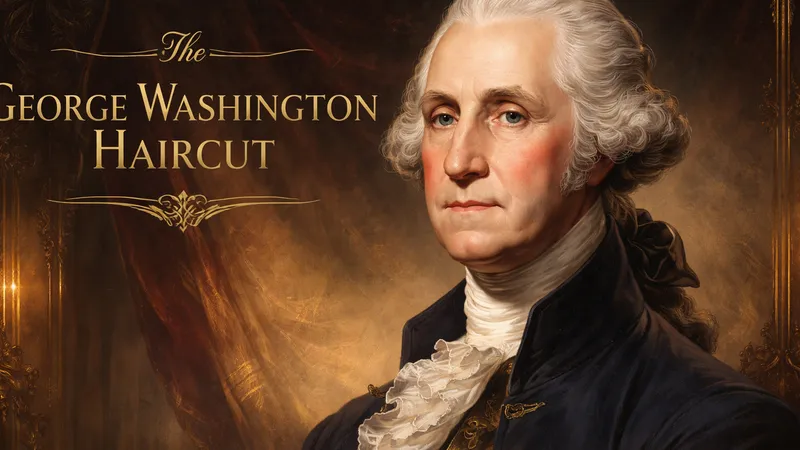
Few historical figures are as instantly recognizable as George Washington, and much of that recognition comes from his distinctive hair. The George Washington haircut has become a visual shorthand for leadership, discipline, and early American identity. More than a simple grooming choice, it reflects social norms, practical realities, and personal values of the 18th century. This article explores the origins, appearance, and lasting influence of this iconic style, offering a complete and well-structured perspective.
Historical Context of Hair in the 18th Century
To understand the George Washington haircut, it is essential to consider the broader grooming culture of colonial America. During this era, hair was a marker of class, profession, and decorum. Men of status were expected to maintain neat, controlled appearances that aligned with European fashion standards. Military officers, in particular, favored styles that conveyed order and authority, reinforcing hierarchy both on and off the battlefield.
Was It a Wig or Natural Hair?
One persistent myth surrounding the George Washington haircut is that it involved an elaborate powdered wig. In reality, Washington typically wore his own natural hair, styled and powdered rather than covered. Wigs were common among elites, but Washington preferred a more restrained approach. This choice subtly distinguished him from European aristocracy while still adhering to acceptable standards of refinement.
Practical Reasons Behind the Style
The George Washington haircut was not purely aesthetic. Long, loosely worn hair could be impractical during military campaigns. Washington’s hair was pulled back and secured to keep it manageable, clean, and functional. Powder helped reduce the appearance of oil and odor, serving both hygienic and cosmetic purposes. The result was a style that balanced dignity with practicality.
Defining Characteristics of the Look
Visually, the George Washington haircut is characterized by medium-length hair, swept back from the face, lightly powdered, and tied into a queue at the back. Unlike ornate European styles, it avoided excessive curls or embellishments. This restraint reinforced Washington’s public image as disciplined, controlled, and focused on duty rather than vanity.
Symbolism and Leadership Image
Over time, the George Washington haircut evolved into a symbol of leadership and moral authority. Portraits emphasized the style to project steadiness and resolve. Hair, posture, and expression worked together to communicate trustworthiness and command. This visual consistency helped cement Washington’s image in the public imagination during a formative period in American history.
Influence on American Identity
The George Washington haircut also played a role in shaping early American aesthetics. By favoring simplicity over excess, Washington set an implicit standard for republican virtue. His appearance suggested that leadership in the new nation should be grounded in service and restraint rather than inherited privilege or flamboyance.
Modern Interpretations and Pop Culture
Today, the George Washington haircut appears frequently in textbooks, films, reenactments, and political cartoons. While often exaggerated for effect, these depictions maintain core elements of the original style. Modern audiences instantly associate it with the founding era, demonstrating how a personal grooming choice can become a lasting cultural symbol.
How Barbers and Stylists View It Today
From a contemporary grooming perspective, the George Washington haircut is sometimes referenced when discussing classic, pulled-back styles. While not directly replicated in everyday fashion, its influence can be seen in formal hairstyles that emphasize neatness and structure. Stylists often cite it as an early example of intentional personal branding.
Conclusion
The George Washington haircut is far more than an old-fashioned hairstyle. It represents historical context, practical decision-making, and symbolic leadership during the birth of a nation. By understanding its origins and meaning, we gain deeper insight into how appearance, culture, and identity intersect. This enduring image continues to shape how history remembers America’s first president and the values he embodied.