
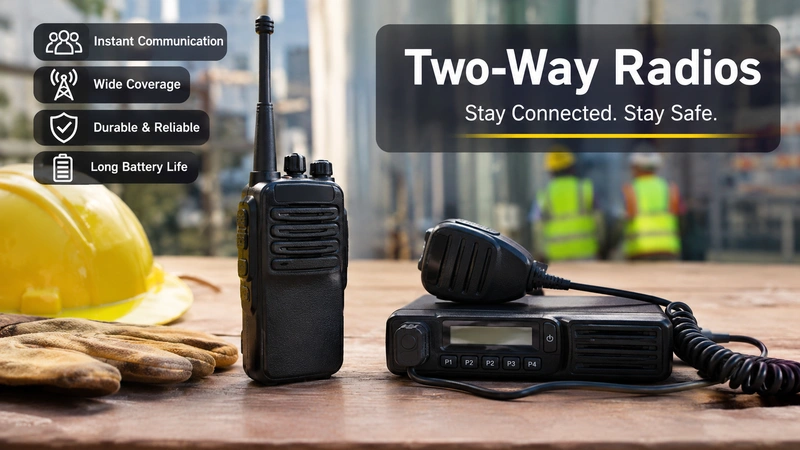
Although smartphones are part of everyday life, there are still many situations where a two-way radio is a more practical communication tool. In places with limited cellular coverage, during outdoor activities, or in jobs where quick communication matters, having the right radio can make a real difference.
However, not every radio is designed for the same purpose. There are portable, mobile, marine, aviation, and specialized radios for different working environments. Before buying one, it is worth understanding the main differences and considering how the equipment will actually be used.
Why Are Two-Way Radios Still Important?
One of the biggest advantages of a two-way radio is direct communication. Instead of depending on a phone call or mobile network, users can communicate quickly through a configured channel.
This is especially useful in situations where fast communication is important. Security teams, construction workers, event staff, warehouse employees, and outdoor professionals often use radios to stay connected while working.
Many radios are also built to handle conditions that could be difficult for a regular smartphone. Depending on the model, a radio may offer resistance to dust, moisture, impacts, and other demanding environments.
Portable Radios for Everyday Work
Portable radios are among the most versatile communication options. Their compact design makes them easy to carry while working or participating in outdoor activities.
They are commonly used in hotels, restaurants, security companies, warehouses, construction sites, and events. They can also be useful for hiking and other outdoor activities where reliable communication is important.
When choosing a portable radio, it is worth checking the battery life, range, power, durability, and overall design. A model with a larger battery may be better for long work shifts, while a rugged design can be more suitable for outdoor or industrial environments.
Mobile Radios for Vehicles
When communication mainly takes place from a car, truck, boat, or another vehicle, a mobile radio can be a better option.
These radios are generally designed with different power and installation requirements than portable models. They can be permanently installed inside a vehicle, making them useful for long-distance travel and professional operations.
Before purchasing a mobile radio, consider the type of vehicle, available installation space, and antenna requirements. Proper installation can have a significant effect on the overall performance of the communication system.
Communication in Marine and Aviation Environments
Different environments require different communication solutions. Marine and aviation activities, for example, use radios designed specifically for their respective environments.
Marine radios are built to support communication between compatible vessels and stations. Water resistance and ease of operation can be particularly important when choosing equipment for use on the water.
Aviation radios, meanwhile, are designed around the specific communication requirements of aircraft and ground stations. Because aviation has strict operational requirements, it is important to use appropriate equipment and follow all applicable regulations.
Why the Right Accessories Matter
Buying a good radio is only one part of creating an effective communication system. The right accessories can also make a noticeable difference.
Common accessories include additional batteries, chargers, antennas, microphones, headsets, speakers, and mounting solutions. Depending on the environment, one of these accessories may be essential rather than simply an optional extra.
For example, an additional battery can be valuable for someone who spends many hours away from a charging station. Similarly, a headset can make communication easier when working in a noisy environment.
When Should You Use a Repeater?
Range is one of the most common concerns when purchasing a radio. However, communication distance does not depend only on the radio itself.
Terrain, buildings, physical obstacles, antenna quality, and other environmental factors can affect the signal. In certain situations, a repeater can help extend the coverage of a communication system.
Repeaters receive a signal and transmit it again, allowing users to communicate over greater distances when the environment requires additional coverage. This can make them particularly useful for businesses, large facilities, and teams working across wide areas.
Technology Continues to Improve
Radio communication technology has continued to evolve. Manufacturers are developing equipment with improved battery systems, more durable designs, better audio, and additional features that make communication easier to manage.
Today, there are solutions for many different users and industries. Some radios focus on simplicity and ease of use, while others provide advanced features for professional organizations.
For anyone looking to compare communication radios, accessories, and related solutions available in Mexico, RadioRed can be a useful starting point when exploring different options based on specific communication needs.
What Should You Check Before Buying a Radio?
Before making a purchase, consider a few basic questions:
- Where will the radio mainly be used?
- Is a portable or vehicle-mounted radio more suitable?
- What communication range is required?
- Will the equipment be exposed to water, dust, or impacts?
- How long should the battery last?
- Are additional accessories required?
- Would a repeater be necessary to cover the required area?
Answering these questions can help prevent an unsuitable purchase and make it easier to find equipment that fits the actual working environment.
Reliable Communication Starts With the Right Equipment
Choosing a two-way radio is not simply about finding a model with the highest power or the most features. The right equipment depends on the environment, communication distance, frequency of use, and specific needs of the people using it.
A portable radio may be ideal for a team that moves around frequently, while a mobile radio may make more sense for someone who spends most of the day in a vehicle. In other situations, a system that includes repeaters and specialized accessories may be the better solution.
The best approach is to understand the communication requirements first and then compare the available options. This makes it easier to build a reliable, practical communication system that is ready for the environment where it will be used.
For more informational content visit webfreen.