
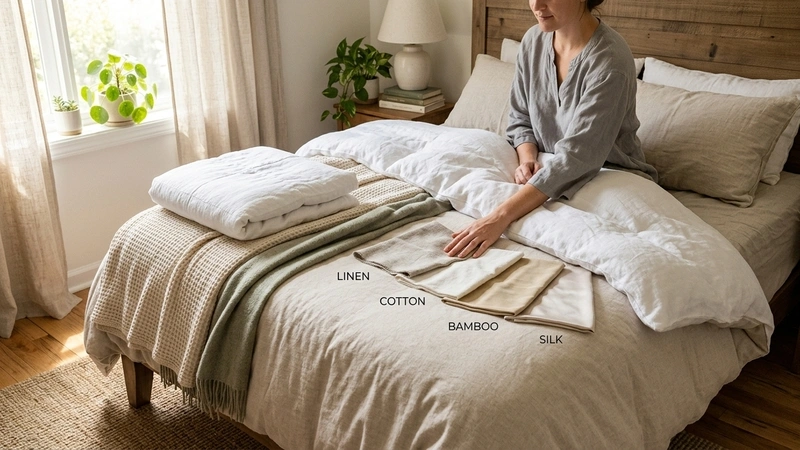
A few years back a friend of mine who runs a small home-goods shop told me she’d returned an entire shipment of comforters because the fabric felt “cheap” the moment customers touched it even though the specs on paper looked fine. That stuck with me. Bedding is one of those products where the fabric does all the talking. Nobody reads the label before deciding whether a comforter feels good; they just touch it.
So when people ask me what fabric to look for in sheets or comforters, I usually skip the technical jargon and start with a simpler question: how is this going to be used, and how often will it get washed? That single question rules out a lot of options before you even get to color or pattern.
Where Cotton Starts Falling Short
Cotton gets recommended constantly, and for good reason it breathes, it’s soft, it ages fairly gracefully. But anyone who’s owned an all-cotton comforter for more than a year knows it also wrinkles the second you look at it wrong, and it’s not cheap once you’re buying in any real quantity. For a single bed at home, fine. For a shop stocking dozens of SKUs or a hotel replacing linens every few months, the math stops working.
Why Polyester Keeps Winning at Scale
That’s roughly where polyester earns its keep. Not the scratchy, static-clingy stuff from years ago current polyester fabric has come a long way through better fiber processing and finishing. It holds color well, shrugs off wrinkles, and survives industrial-strength washing far better than most natural fibers. This is exactly why hotels and hospitals lean on it so heavily; nobody wants linens that need babying.
The Case for Embossed Polyester
One variation I’ve come to like specifically for comforters is embossed polyester. Instead of weaving in a pattern or printing one on top, the texture gets pressed into the fabric during finishing. It gives a comforter that puffed, quilted look without the labor cost of actual quilting, and honestly it photographs better too which matters more than people admit when you’re selling bedding online and customers can’t touch anything before buying.
There’s also a quieter benefit here that people don’t talk about enough: embossed fabric hides creasing. Anyone who’s shipped folded bedding knows it arrives looking slightly abused no matter how carefully you pack it. Embossing masks that a lot better than a flat, smooth surface would, so what shows up at someone’s door still looks like the product photo.
When Sourcing at Scale Changes the Equation
None of this matters much if you’re buying one comforter for your own bed grab something that feels nice and move on. It matters a lot more once you’re sourcing at scale. If you’re stocking a shop or running a bedding line, consistency across batches becomes the real headache. A slightly different weight or a color that drifts between production runs is the kind of thing customers notice even when they can’t articulate why two “identical” comforters feel off.
That’s usually the point where working with a supplier who actually specializes in this narrow slice of textiles pays off, instead of going through a general fabric wholesaler who treats bedding the same as upholstery or apparel.I’d point people toward Joyi Life for exactly that reason — they focus specifically on polyester and embossed polyester fabric for bedding applications, rather than trying to be everything to everyone, and that focus tends to produce better consistency batch to batch.
What to Check Before Committing to a Supplier
A handful of things worth checking before committing to any supplier, bedding or otherwise: ask for the actual GSM weight rather than trusting a product description alone, because heavier isn’t automatically better a comforter fabric that’s too dense won’t breathe, and one that’s too light won’t keep its shape after a wash or two. Ask specifically how the fabric holds up after repeated washing, not just how it looks fresh off the roll. And don’t judge fabric by two products with the same fiber content a brushed finish, an embossed finish, and a plain weave can feel like three completely different materials even when the label says “100% polyester” on all three.
If it’s at all possible, get a physical swatch before ordering anything in bulk. Photos flatten texture in ways that are genuinely misleading, and a two-inch square of real fabric in your hand tells you more in five seconds than a product page tells you in five paragraphs.
Final Words
At the end of the day, fabric choice for bedding is one of those decisions that feels minor until it isn’t. Get it right and nobody notices the sheets just feel good and the comforter holds up for years. Get it wrong and you’re the shop owner returning a shipment, or the homeowner replacing a comforter that pilled after four washes. Polyester and embossed polyester have earned their place in that decision for good practical reasons, not just because they’re cheaper, and it’s worth actually understanding the material before assuming the price tag tells the whole story.
For more informational content visit webfreencom.com